
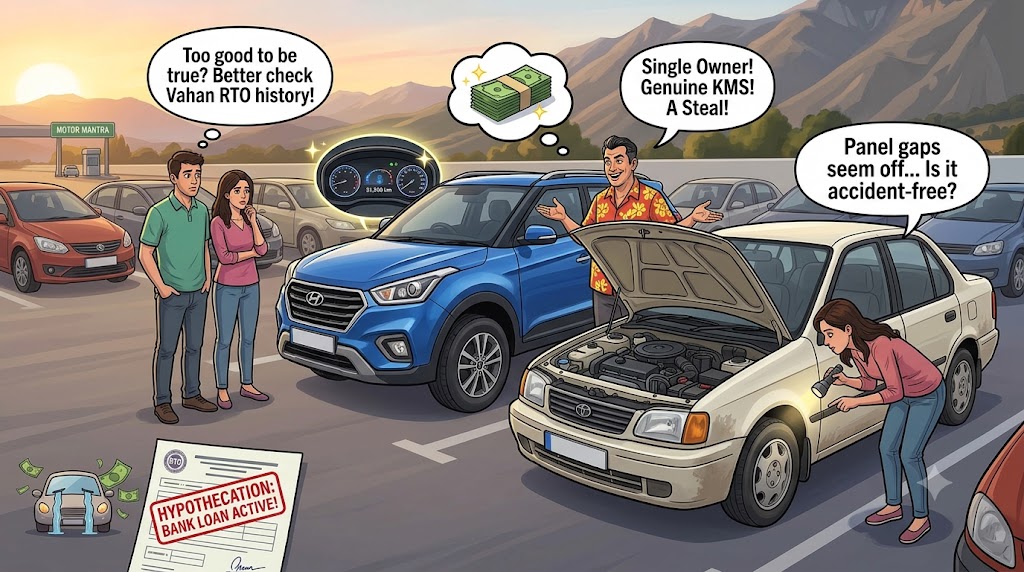
Buying a Used Car in India? 5 Costly Mistakes First-Time Buyers Always Make
Table of Contents
With the on-road prices of new cars skyrocketing, the pre-owned car market in India is exploding. According to recent automotive mobility reports, a massive 80% of used car buyers are first-time owners. Instead of checking into a basic entry-level hatchback, buyers realize they can get a slightly older, feature-loaded SUV or sedan for the exact same budget.
It sounds like a smart financial shortcut, right?
But here is the catch: while buying a used car can save you a mountain of cash, it can also turn into a nightmare if you pick a lemon. Unlike a new showroom vehicle protected by a clean slate, a used car carries a secret history of how it was driven, crashed, flooded, or maintained.
At MotorMantra.in, we look at these cars from the inside out. In this guide, we are pulling back the curtain on the 5 biggest used car mistakes buyers make and showing you exactly how to spot hidden traps before handing over your hard-earned money.
1. Falling For “Odometer Rollback” (The Low-KM Trap)
This is the oldest and most successful scam in the unorganized pre-owned market. A seller posts a listing for a 6-year-old car boasting a pristine, suspiciously low reading of just “32,000 km.” The digital dashboard looks clean, and the engine starts right up.
In reality, that car has likely clocked over 90,000 km, and a shady dealer paid a local technician to plug a scanner into the dashboard and electronically roll the mileage back.
💡 Our Workshop Take
You can wipe a car’s digital memory, but you cannot wipe away physical friction. If a car claims to have run under 30,000 km, look closely at the interior touchpoints. A heavily polished or peeling steering wheel, deeply worn rubber pads on the brake and clutch pedals, or a sagging driver’s seat fabric are instant red flags that the car has run triple the distance shown on the dash.
2. Ignoring Mismatched Paint and Uneven Panel Gaps
Sellers will always give a car a fresh coat of wax or a cheap repaint job to make it look brand new under the sunlight. Buyers get blinded by the gloss and forget to look at the structural symmetry.
Major accidents break the structural factory alignment of a car. When local workshops pull and weld body panels back together, they can almost never replicate the millimeter-perfect gaps left by factory robots.
💡 Our Insight
Walk around the car in broad daylight and look down the side profiles horizontally. Check the gaps between the doors, bonnet, and fenders. If the gap is wide at the top and pinches tightly at the bottom, that car has taken a heavy structural impact. Also, look at the black rubber window seals; if you spot tiny specks of body paint on the rubber trims (overspray), that panel has been quickly repainted to hide damage.
3. Forgetting to Check the RTO “Hypothecation” Status
A car can look completely perfect mechanically, but still be a financial disaster legally. A common mistake is buying a car directly from a private owner without verifying if there is an active bank loan against the vehicle.
If the original owner stops paying their EMIs after selling the car to you, the bank holds the legal right to track down and seize your newly purchased vehicle, leaving you with absolutely zero recourse.
- How to protect yourself: Open the government’s official mParivahan app or Vahan portal and enter the vehicle’s registration number. Look at the Hypothecation Status. If it says “Yes” or lists a bank name, the seller must provide an official Bank NOC (Form 35) proving the loan is fully closed. Never transfer token money without seeing this paper.
4. Buying Without a “Cold Start” Inspection
When you call a private seller or an unorganized local dealer to tell them you are coming for a test drive, they will often start the vehicle and leave it idling for 10 minutes before you arrive.
Why? Because a warm engine hides nasty secrets. Weak batteries, worn-out engine mounts, failing alternators, and leaking head gaskets often make horrible noises or emit smoke only during a completely freezing cold start first thing in the morning.
💡 MotorMantra’s Insight
Always request the dealer to keep the engine dead-cold before you arrive. When you turn the key for the first time, immediately walk to the back and watch the exhaust pipe. Blue smoke means the engine is burning oil internally (expensive engine rebuild warning); persistent thick white smoke means coolant is mixing into the engine block.
5. Overlooking Hidden Flood and Water Damage
With unexpected heavy monsoon flooding hitting major Indian cities over the last few years, thousands of flood-damaged cars enter the used market every season. Unscrupulous dealers dry out the carpets, perfume the interior heavily, and put them up for a quick sale.
Flood water completely destroys modern automotive wiring harnesses, sensors, and computers. A flood-affected car might run fine today, but its electrical components will corrode and fail randomly one by one over the next few months.
💡 Our Workshop Take
Pull the front seatbelts all the way out to their absolute end limits. Water lines and mud stains hide deep inside the spool mechanism where cleaners can’t reach. Additionally, bend down and shine a flashlight directly under the seats to inspect the seat rails. If you find deep orange rust or dried silt inside the carpet crevices, walk away immediately.
Frequently Asked Questions (FAQ)
What is a safe age and mileage limit when buying a used car in India?
As a general rule of thumb, look for vehicles in the 3 to 7-year age bracket with an average usage of under 12,000 km per year. Cars in this sweet spot have already suffered their steepest depreciation hit but still have plenty of reliable service life left without requiring major parts overhauls.
How can I check if a pre-owned car’s service history is genuine?
Skip the dealer’s logbook. Note down the vehicle’s chassis number (VIN) from the engine bay and open the official app of the manufacturer (like Maruti Suzuki Connect or Hyundai Care) or call an authorized service center. They will provide a line-by-line digital record of every service, accidental repair, and the exact odometer reading logged during its last official workshop visit.
Is it safe to buy a used electric vehicle (EV) or strong hybrid right now?
Approach used EVs with caution. Unlike standard petrol or diesel cars, used electric vehicles currently lack clear resale and battery health tracking benchmarks in India. Unless the seller provides an official battery health diagnostic certificate from the manufacturer showing minimal degradation, stick to traditional internal combustion engines for now.
Can I transfer the existing insurance policy of the previous owner to my name?
Yes, but you must apply for an insurance transfer within 14 days of the RTO ownership transfer. Make sure to ask the previous owner if they ever made an insurance claim. A clean claim history means the car was likely accident-free, whereas frequent claims point toward a history of rough driving and fender benders.
Found a Great Used Car Deal But Feeling Unsure?
Don’t gamble your life savings on a hunch. If you have a vehicle quotation sheet or an online listing link that looks a little too good to be true, share it with us in our [Contact Us Portal]. Our workshop team will audit the details and help you spot the traps for free!